

Safe Cooking Temp For Pork Chops
Pork chops have two terrific points going for them. First, they are delicious. Second, they are cheap. It's hard to find a cut of meat (besides boneless skinless chicken thighs) that delivers so well for so little money. And if they're thick pork chops, well, that's even better.
But here's the thing: pork chops only deliver on that promise of deliciousness if you don't overcook them, and overcooking them is easy. Here, we'll go over the thermal tricks you need to know to get perfect, juicy thick-cut pork chops on the grill every time.
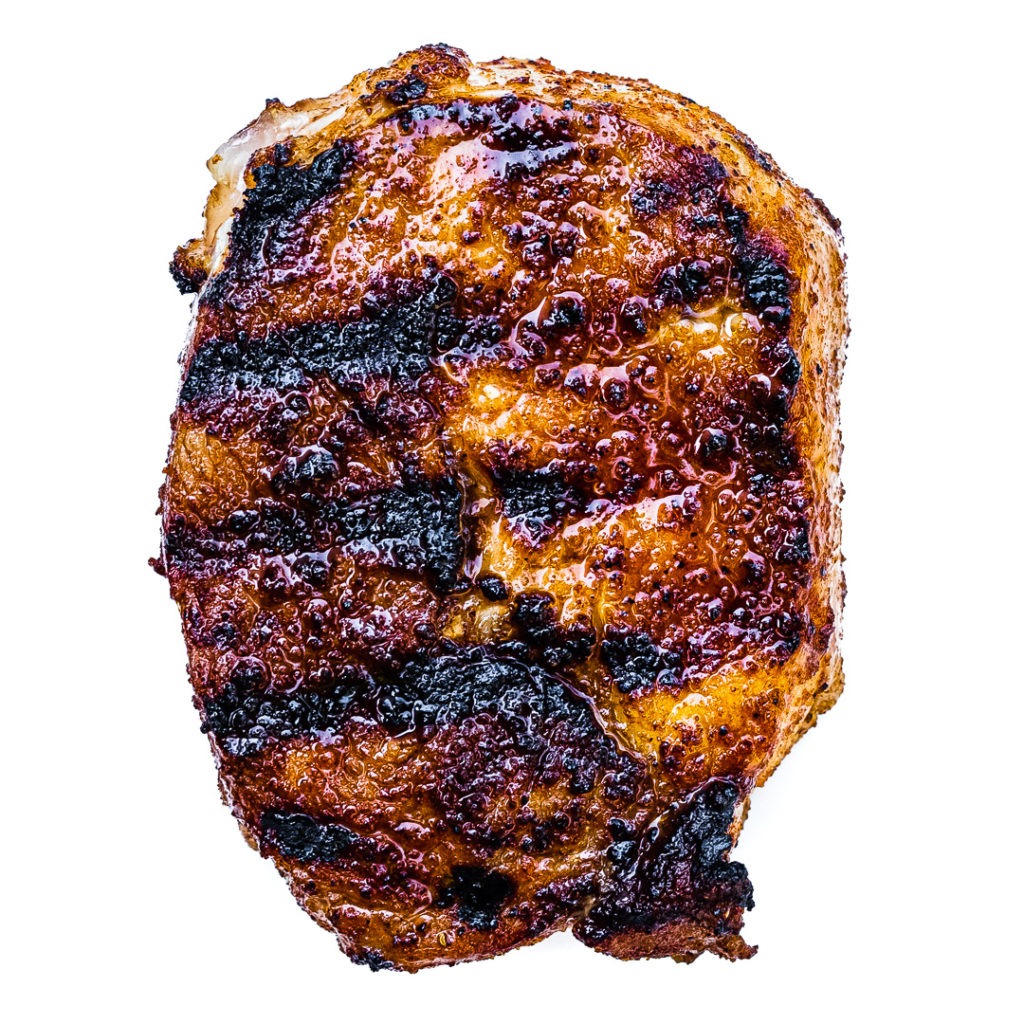
Pork Chop Finish temp: 145°F
Pork Chop Grilling Basics
Pork chops are most often cut from the pork loin and are the pig equivalent of ribeye steaks. Now that may seem incredible, as ribeyes are deeply marbled and known for their fatty richness, but modern chops are actually quite lean and have only a hint of the spinalis cap muscle that crowns a ribeye. This is because of the way that (misplaced) consumer demand shaped hog-breeding practices in the USA. The fear of fat and cholesterol led to the breeding of pigs with little intramuscular fat and therefore leaner chops. If you want a rich and fatty chop, you can still get one, but it will have to come from a heritage breed of pig like Berkshire.
Because of that market-imposed leanness, pork chops are often overcooked and dry. To combat the drying tendency, it's best to keep your chops moving as you cook them. Get your grill ripping hot so that you can get those tasty Maillard-browned grill lines of charry goodness, but don't leave your chop on one side all the way until it's halfway done, and then flip it. Instead, give your chops about 60–90 seconds per side, then flip them multiple times.
Pro Tip: Score the Fat for Even Cooking
Pork chops have a tendency to buckle as they cook, making it hard to maintain even contact with the pan. The layer of fat around the chop's exterior shrinks faster than the meat inside, squeezing it and causing it to buckle. Score the fat in two or three places with a sharp knife. The chops won't look flawless, but they'll cook a heck of a lot more evenly.
—The Food Lab, Kenji Lopez-Alt, pg. 354
Give the same time, and flip again, trying to align the grill lines that have partially formed on the chops with the grill grate. Keeping the chops moving in this way will help keep them from overcooking and drying out.
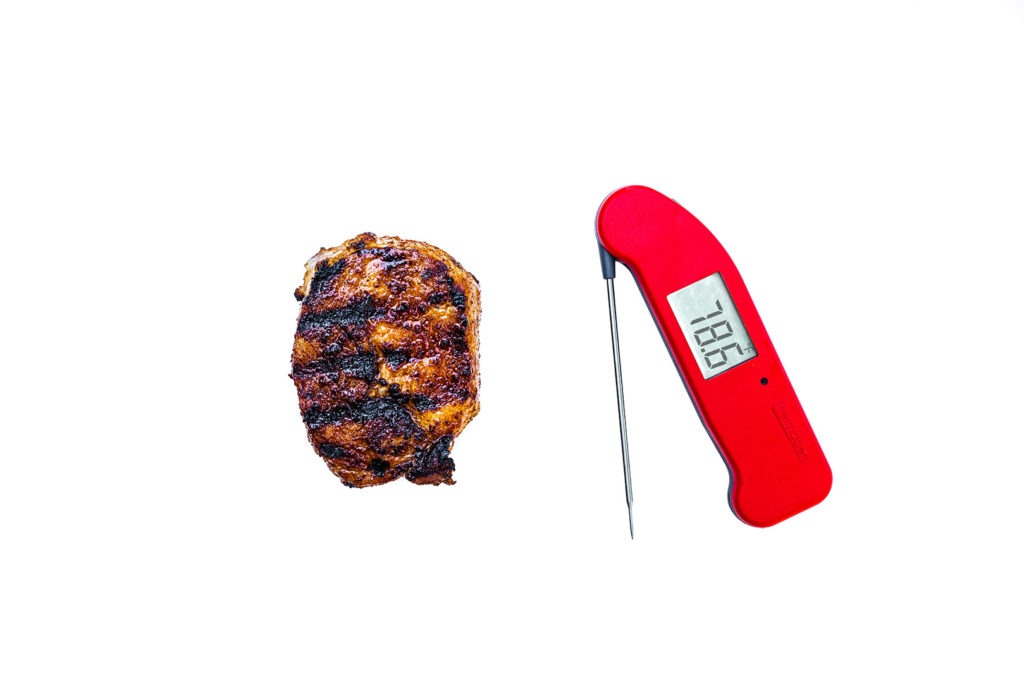
Food-Safe Pork Temperatures
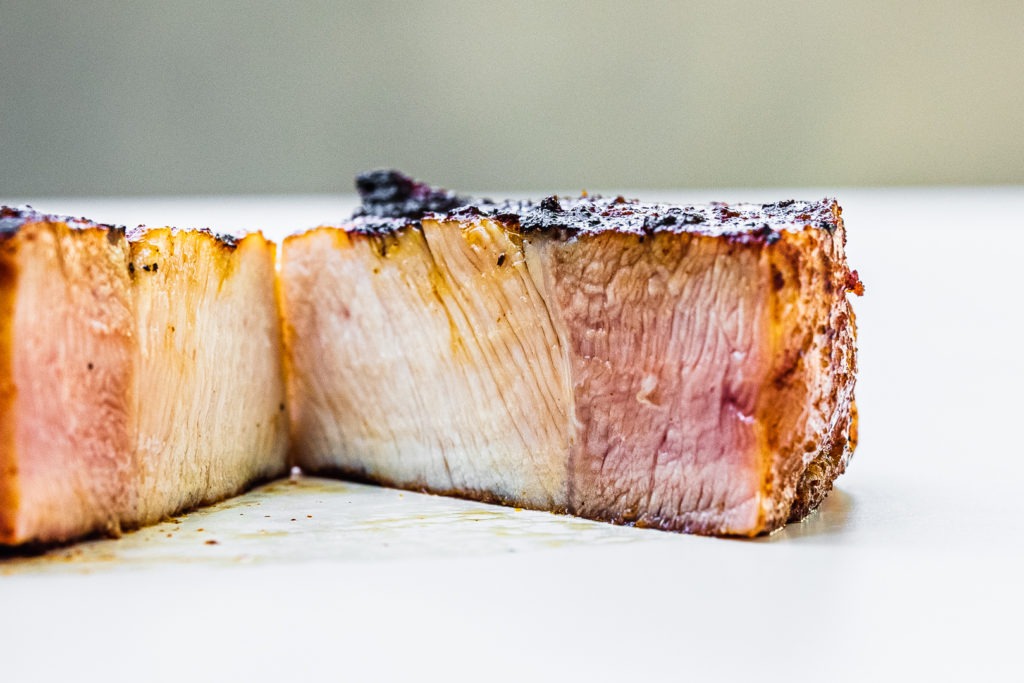
Keeping your pork from drying out, though, doesn't mean you can cook it as rare as you like. For food safety, pork must be cooked to an internal temperature of 145°F (63°C). Carryover cooking will cause the temperature to continue rising after being removed from the heat source, so knowing when to pull the pork chops off the grill is critical. If the internal temperature goes too far beyond 145°F (63°C) the meat quickly dries out and gets tough to chew. Learn more about the food-safe temperature for pork in our post about safe pork temperatures.
Carryover Cooking & Pull Temp
To estimate what temperature to pull the meat from the grill, we need to understand the carryover cooking we expect. The rise in temperature after cooking is affected by two main factors:
- The intensity of the heat energy in the cooking method. A high-temperature cooking method—like grilling—causes the heat energy to move very quickly through the meat. Not only will the heat be moving through the meat quickly, but there will be more of it in the near the surface to distribute through the whole piece. Cooking over high heat means more carryover.
- The mass of the meat being cooked. Since a pork chop is much smaller than a cut like a shoulder roast, there is less meat for the carryover cooking to heat up, so it tends to have a less significant effect.
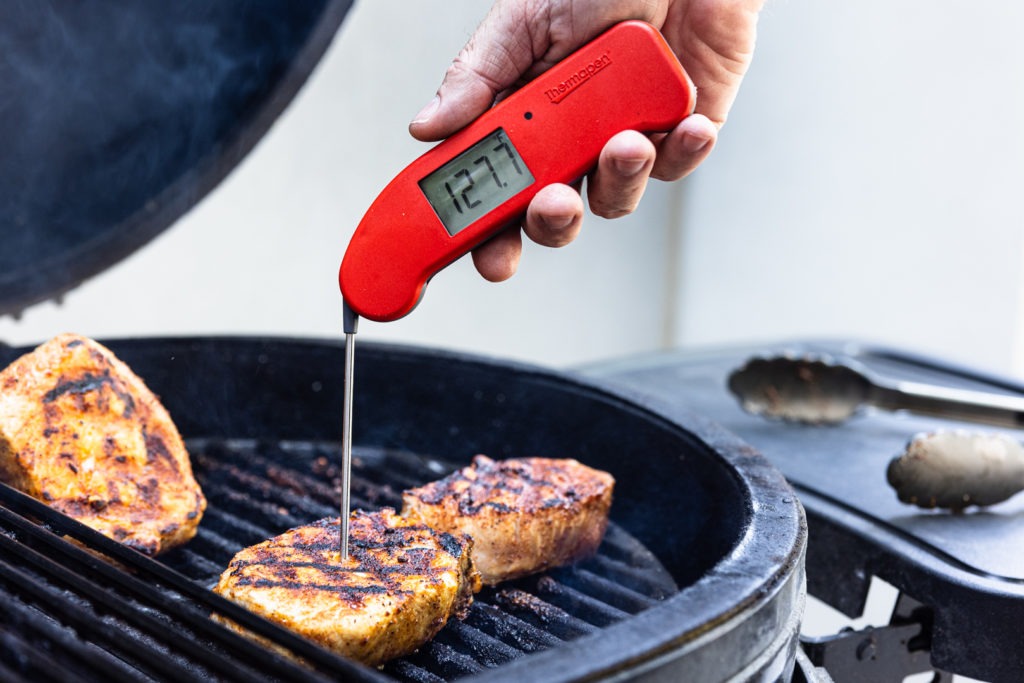
With the combination of a high heat cooking method and a smaller cut of meat, the temperature increase we see during the rest will be quick but still fairly high. After testing multiple chops, we consistently saw an 11-13°F (6-7°C) rise in temperature. The best pull temp with our grill was about 133°F (56°C). Given the many variables involved with carryover cooking, however, we're recommending a pull temp of 135°F (57°C) to ensure proper doneness.
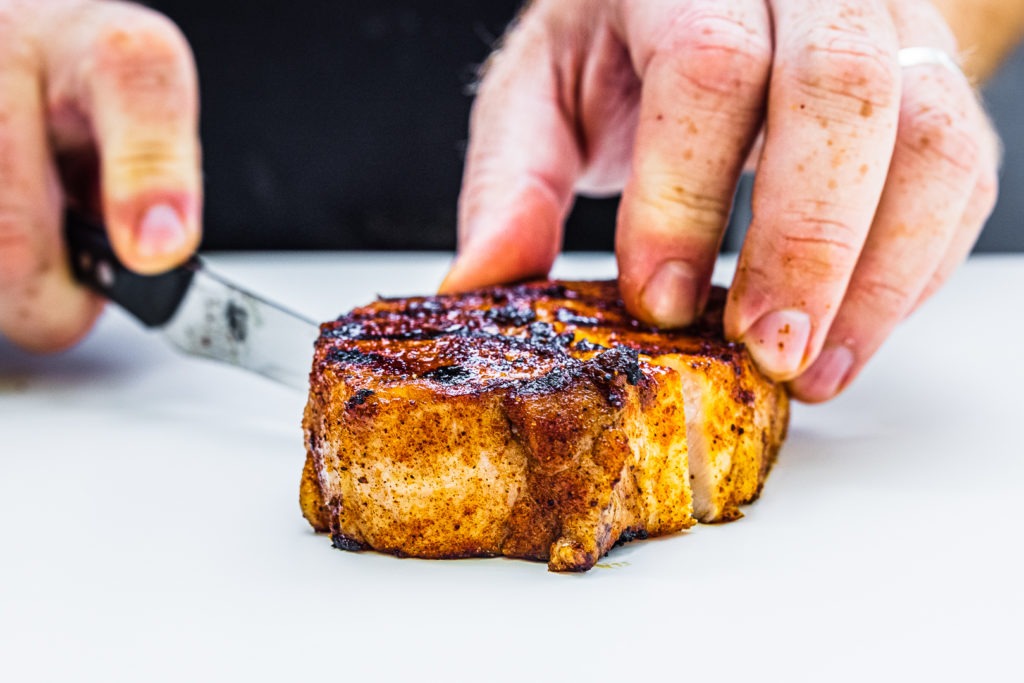
Making sure you actually hit that temperature is more than a matter of looking, guessing, or poking your chops with your finger. To know how done your pork chops are, you need a thermometer! A fast and accurate thermometer like Thermapen® ONE can quickly tell you the temperature of all your chops, and it can do it fast enough that none of them are overcooking while you're temping the others. You'll get far better results with a thermometer than you will without one, for sure.
Brine Your Pork Chops for the Juiciest Results
One of the best things you can do to increase juiciness when cooking lean meats like pork chops (and poultry) is brining. Brining meats helps to break down the proteins in their muscle fibers, preventing them from squeezing and drying out during cooking. The salt in the brine dissolves some of the proteins, forming a gel capable of holding on to more water. With more water and the protein structure of the meat altered, the meat will be juicier and more tender. (For more on the concepts behind brining, see our piece on dry brining a turkey.)
Plus, you can help impart a little bit of flavor to the chops by brining them, so it's a real win/win.
When making the brine, I find it expedient to make it using only half the water, then adding ice to cool it and bring it to a proper dilution. Just be sure to use your Thermapen to check the temp of the brine before adding the chops. Food safety practices say that meat can be in the range between 40°F and 70°F (4°C and 21°C) for four hours. Getting the brine on the cool side before you put it in the fridge will ensure that you aren't hanging out in that zone for too long.
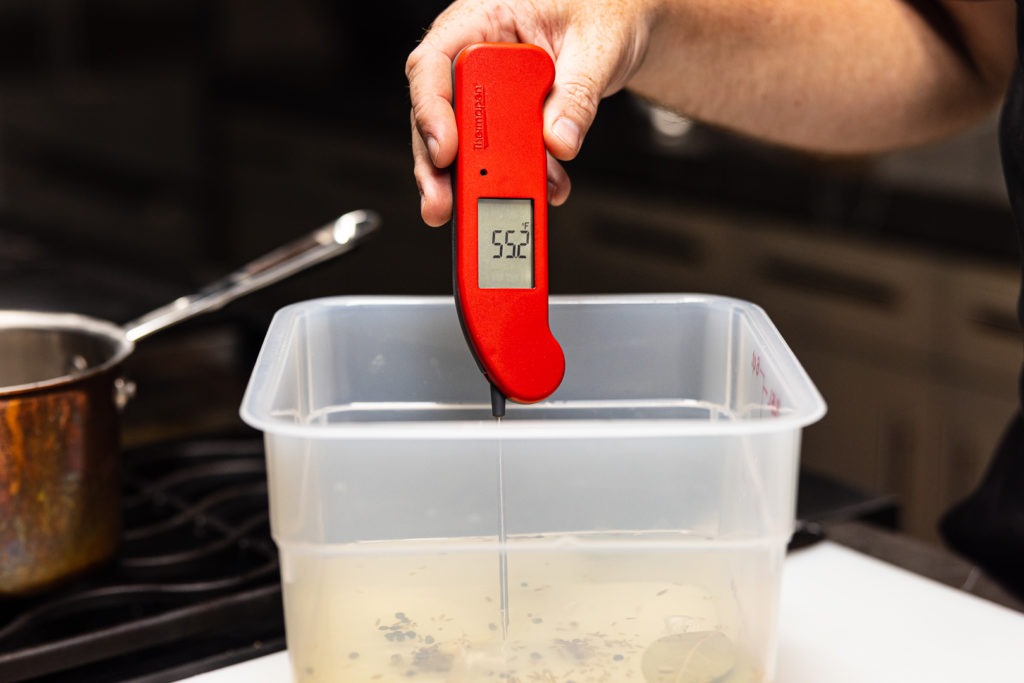
Note: After you brine your chops but before you cook them, dry them well with some paper towels. A wet surface will not brown, and you'll pump too much heat into the meat as you try to cook off that water. Starting with meat that has been dried off will help you get better browning without overcooking.
Conclusion
If you want a delicious, cheap way to feed a crowd, buy a boneless pork loin, slice it into thick, meaty chops, and grill them to utter perfection. By brining the meat and then using a fast and accurate thermometer like Thermapen ONE you can be sure that each and every chop is reaching its full potential for juiciness, and that none of them are going to the table dry. You'll love the results you get from this method every single time.
Description
A method for cooking thick-cut pork chops on the grill
- 1–1/2 inch thick boneless pork chops
- Pork seasoning/BBQ rub of your choice
Brine
- 1 quart water
- 32 oz (by weight) ice
- 1/4 cup kosher salt
- 2 bay leaves
- 2 cloves garlic, crushed
- 2 tsp whole peppercorns
- 2 tsp fennel seeds
The day before you cook
Make the brine
- Bring the quart of water to a boil, remove it from heat.
- Add the salt, pepper, bay leaves, and garlic to the hot water and let them steep for a few minutes.
- Cool the brine by adding the 32 oz ice to the hot brine, cooling it and diluting it to an appropriate level.
- Verify that your brine is cooler than 70°F (21°C).
- Transfer the brine to a sealable container and submerge your pork chops in it. Allow them to brine overnight in the refrigerator.
The day of the cook
Cook the chops
- Set up your grill for direct cooking and preheat it. You want the surface temp of the grill to be at least 425°F (218°C).
- Remove the pork chops from the brine and pat them completely dry.
- Once patted dry, apply dry rub to both sides of the chops.
- Oil your grill grate, then place the chops on the hot grill. Cook them, turning about every 90 seconds until a Thermapen inserted into the center reads about 135°F (57°C). This should take about 5–7 minutes.
- Pull from the grill and allow to rest on a cutting board, tented with foil, for about 5-10 minutes.
- Serve the chops!
Shop now for products used in this post:

Resources:
The Science of Good Cooking, Cook's Illustrated, pg. 102-103

Safe Cooking Temp For Pork Chops
Source: https://blog.thermoworks.com/pork/key-temps-juicy-grilled-pork-chops/
Posted by: gracesaggeent88.blogspot.com
0 Response to "Safe Cooking Temp For Pork Chops"
Post a Comment